Before a tire reaches the market, it must survive a gauntlet of laboratory experiments, track evaluations, and regulatory certifications. Tire testing is a rigorous, multi-stage process that ensures every product meets standards for safety, durability, and performance. Understanding what happens behind the scenes reveals why quality tires cost what they do—and why cheap alternatives often fall short.
Laboratory and Material Testing
The process begins long before a tire is built. Raw materials undergo chemical analysis to verify purity and consistency. Rubber compounds are tested for hardness, tensile strength, elongation, and tear resistance. Heat aging tests expose samples to elevated temperatures to simulate years of service. Ozone chambers bombard rubber with concentrated ozone to check for cracking. These material tests ensure that the compound will perform as designed throughout the tire’s life.
Once a prototype tire is built, it undergoes static tests. Plunge tests drive a metal plunger into the tread to measure puncture resistance. Bead unseating tests apply lateral force to the inflated tire to verify it remains securely on the rim. Dimension checks confirm that the tire meets its specified size tolerances.
Indoor Wheel Testing
Indoor testing uses massive drums to simulate road conditions under controlled laboratory settings. A tire is mounted on a wheel and pressed against a rotating drum. High-speed tests spin the tire to its maximum rated speed—sometimes beyond—to ensure it holds together under centrifugal force. Endurance tests run for hours at varying loads and speeds, monitoring temperature and pressure to detect weaknesses. Treadwear tests use abrasive drums to measure wear rates under standardized conditions, generating the UTQG treadwear ratings.
Outdoor and Track Testing
Real-world conditions cannot be fully replicated indoors. Manufacturers use proving grounds and test tracks to evaluate handling, braking, noise, and comfort. Wet handling courses feature flooded surfaces for hydroplaning resistance and wet braking measurements. Dry handling circuits assess cornering grip and steering response. Noise testing uses specialized road surfaces and microphones to measure interior and exterior sound levels. Ride comfort is evaluated subjectively by trained test drivers who rate harshness, impact absorption, and vibration.
Winter tire testing takes place in arctic conditions. Test facilities in Scandinavia, northern Canada, and Japan provide packed snow and ice surfaces for acceleration, braking, and cornering evaluations. The Three-Peak Mountain Snowflake certification requires standardized testing at accredited facilities.
Regulatory Certification
Governments mandate specific tests before a tire can be sold. In the United States, the National Highway Traffic Safety Administration requires compliance with Federal Motor Vehicle Safety Standard 139 for passenger tires. This includes endurance, high-speed, and bead unseating tests. The European Union requires ECE certification, covering noise, wet grip, and rolling resistance labeling. Other markets have their own standards—GCC in the Middle East, INMETRO in Brazil, and CCC in China. Manufacturers must submit samples to accredited laboratories and maintain production consistency to keep certifications valid.
The Cost of Testing
The testing process is expensive. A single tire model may require hundreds of prototype tires, thousands of hours of machine time, and extensive track sessions. This investment explains part of the price gap between premium and budget tires. Budget manufacturers may perform only the minimum regulatory tests, while premium brands conduct extensive additional evaluations to fine-tune performance and durability.
What This Means for Drivers
When you buy a tire, you are not just purchasing rubber and steel. You are purchasing the confidence that comes from thousands of hours of testing. The certifications on the sidewall—DOT, ECE, 3PMSF—represent verified performance. The UTQG ratings reflect standardized evaluations. Understanding this process helps you value the engineering behind your tires and choose products that have earned their place on the road.
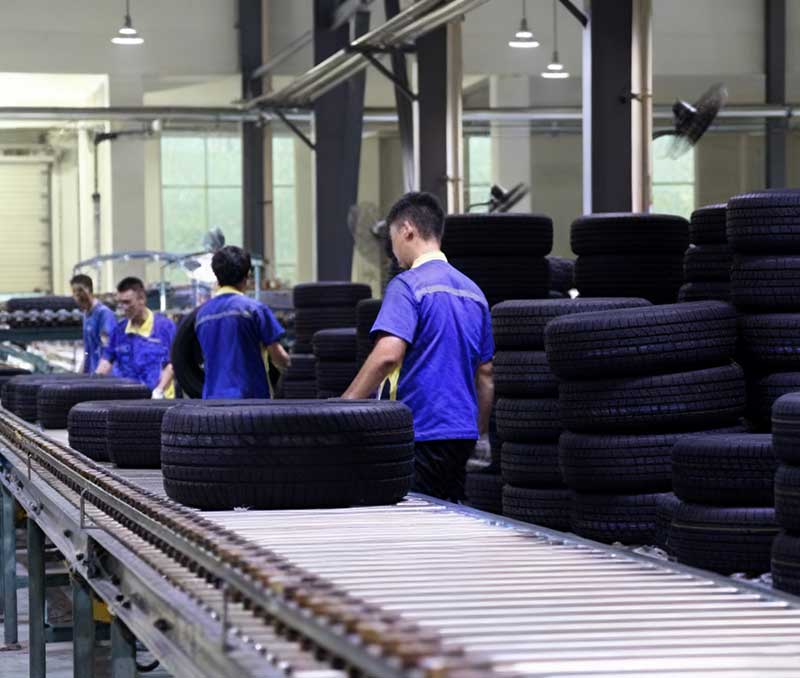
If you are interested in the actual tire manufacturing process, welcome to visit our factory; we extend a sincere invitation to all our distributors and agents!